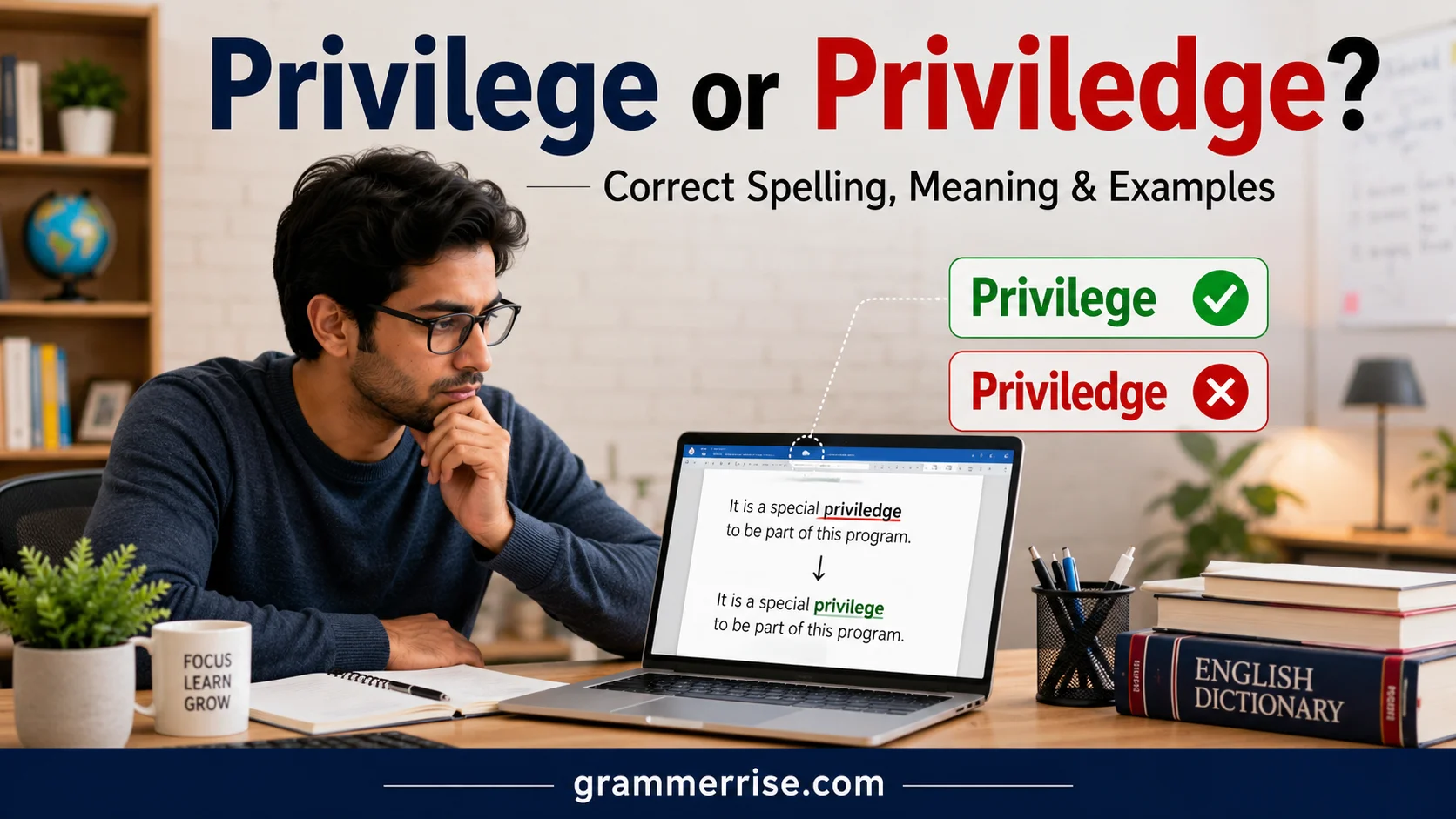
Privilege or Priviledge helps English learners avoid spelling mistakes and improve writing through better grammar and communication skills! Many writers feel confused when these words appear because they look similar, but only privilege is the correct and standard form. In my experience with professional communication and professional writing, this spelling challenge often affects accuracy, writing skills, and confidence.
The privilege definition describes a special, unearned advantage or right granted to a person or group due to social, economic, or cultural circumstances. For example, Student_A from a wealthy family may have access to private tutors, textbooks, and school supplies, while Student_B from a lower-income background may experience unequal access and fewer resources.
Learning the difference, meaning, and definition of these terms improves English learning, vocabulary, and proper usage. Following grammar rules, spelling rules, and language rules helps create better English writing, proper English, and clear communication in every context.
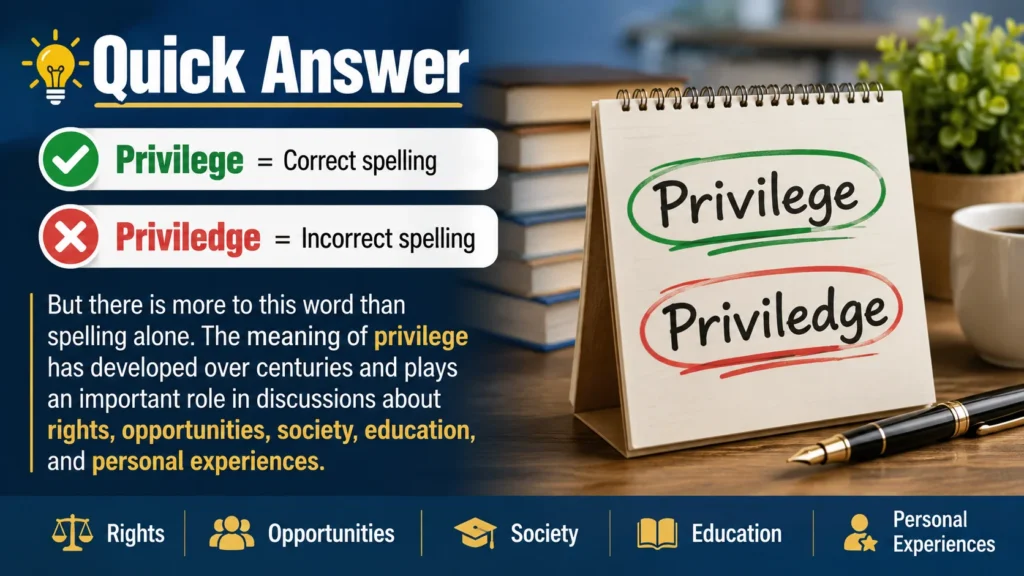
Quick Answer
✅ Privilege = Correct spelling
❌ Priviledge = Incorrect spelling
But there is more to this word than spelling alone. The meaning of privilege has developed over centuries and plays an important role in discussions about rights, opportunities, society, education, and personal experiences.
Privilege or Priviledge: Which One Is Correct?
When choosing between privilege or priviledge, always use:
✅ Privilege
Privilege is the correct spelling.
It means a special advantage, benefit, opportunity, or right that someone receives because of a certain situation, position, achievement, or circumstance.
Examples:
- Having access to quality education can be a privilege.
- It was a privilege to meet the famous writer.
- Employees with flexible schedules may consider remote work a workplace privilege.
❌ Priviledge
Priviledge is a spelling mistake.
It often happens because people mistakenly believe the word follows the same pattern as:
- Knowledge
- College
- Pledge
- Edge
However, privilege does not contain “ledge.”
The correct ending is:
Priv-i-lege
Not:
Priv-i-ledge
Privilege vs Priviledge: Simple Comparison Table
| Word | Correct Spelling | Meaning | Example |
| Privilege | ✅ Yes | A special benefit, advantage, or right | “Healthcare access is a privilege.” |
| Priviledge | ❌ No | Incorrect spelling | “Priviledge” should not be used. |
A simple memory trick:
Privilege gets the benefit, but it does not get the extra “d.”
What Does Privilege Mean?
The word privilege can have several meanings depending on the situation. At its core, it describes something valuable that not everyone automatically receives.
A privilege can be:
- A special opportunity
- A benefit
- An advantage
- A special right
- An honor or pleasure
For example, when someone says:
“It is a privilege to work with this team.”
They are not talking about power or wealth. They mean the opportunity feels valuable and appreciated.
The General Meaning of Privilege
In everyday English, privilege means having access to something beneficial that others may not have.
This advantage might come from:
- A position
- A membership
- A relationship
- A personal achievement
- A specific circumstance
For example:
A person who joins an exclusive organization may receive certain privileges, such as:
- Special services
- Private events
- Additional benefits
- Priority access
Another example:
A student who earns a scholarship receives the privilege of studying without carrying the full financial burden.
Social Meaning of Privilege
The word privilege is also widely used when discussing society and human experiences.
In social discussions, privilege usually refers to advantages that people may receive because of circumstances they were born into or environments they experienced.
These advantages can include:
- Economic opportunities
- Educational access
- Social support
- Community resources
- Professional networks
However, having privilege does not mean someone has never experienced hardship.
A person can have advantages in one area while facing challenges in another.
Example:
Someone might have:
- Financial privilege because they grew up in a wealthy household.
- Personal struggles because of health, relationships, or other life challenges.
Human experiences are complex. People can experience both advantages and difficulties at the same time.
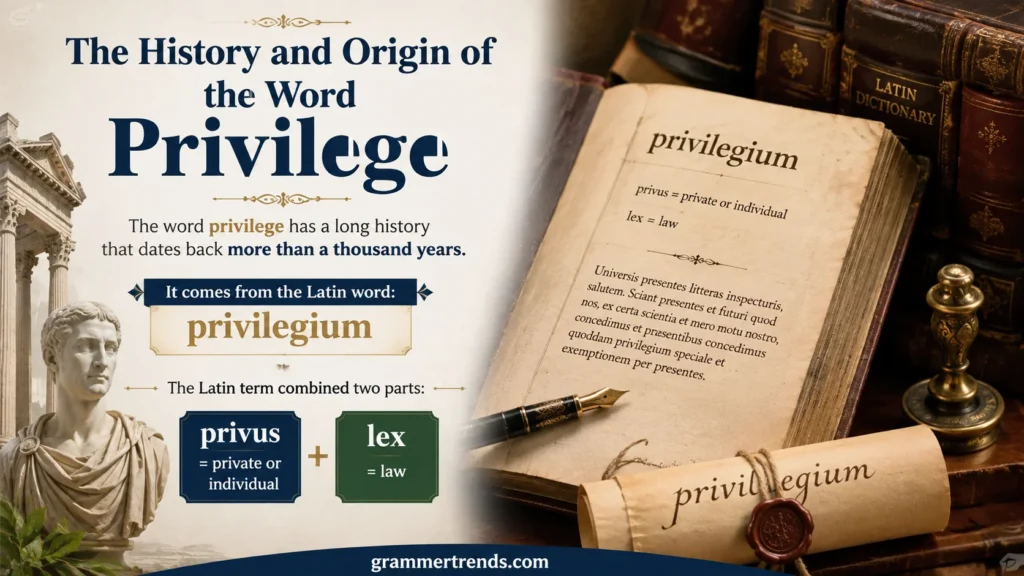
The History and Origin of the Word Privilege
The word privilege has a long history that dates back more than a thousand years.
It comes from the Latin word:
privilegium
The Latin term combined two parts:
- privus = private or individual
- lex = law
Together, the original meaning referred to a private law or special rule made for an individual person or group.
Over time, the meaning changed.
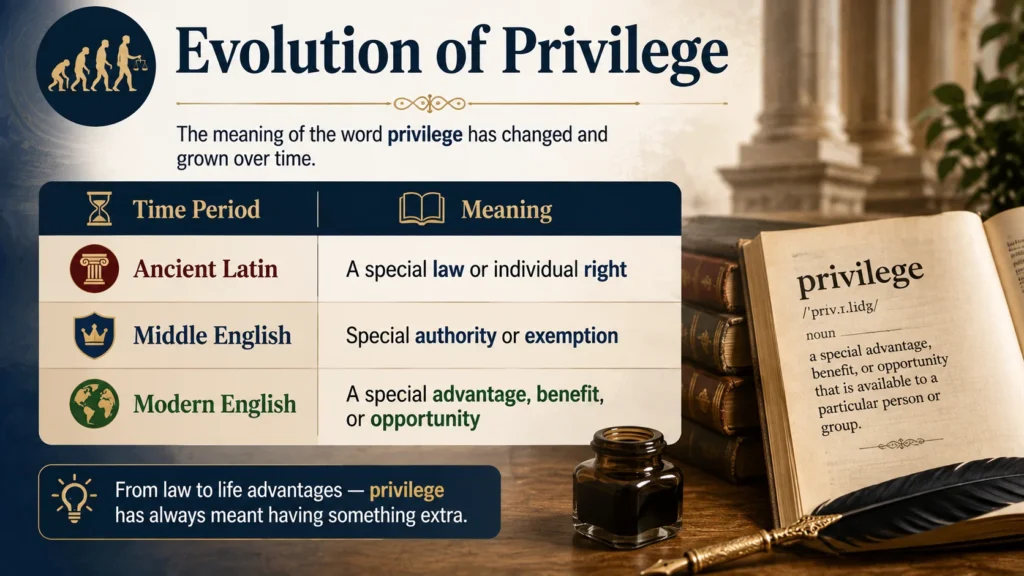
Evolution of Privilege
| Time Period | Meaning |
| Ancient Latin | A special law or individual right |
| Middle English | Special authority or exemption |
| Modern English | A special advantage, benefit, or opportunity |
Today, privilege is used in many areas, including:
- Law
- Education
- Employment
- Social discussions
- Personal relationships
Why Do People Spell Privilege as Priviledge?
The spelling mistake priviledge happens because English spelling can sometimes be unpredictable.
Many people rely on sound patterns when writing. Since privilege sounds similar to words ending in “ledge,” they naturally add a “d.”
For example:
- Knowledge
- College
- Pledge
- Fledge
These words contain the “dge” sound and include a “d” before the “ge.”
However, privilege follows a different spelling pattern.
The correct spelling is:
Privilege
The word ends with:
-lege
not:
-ledge
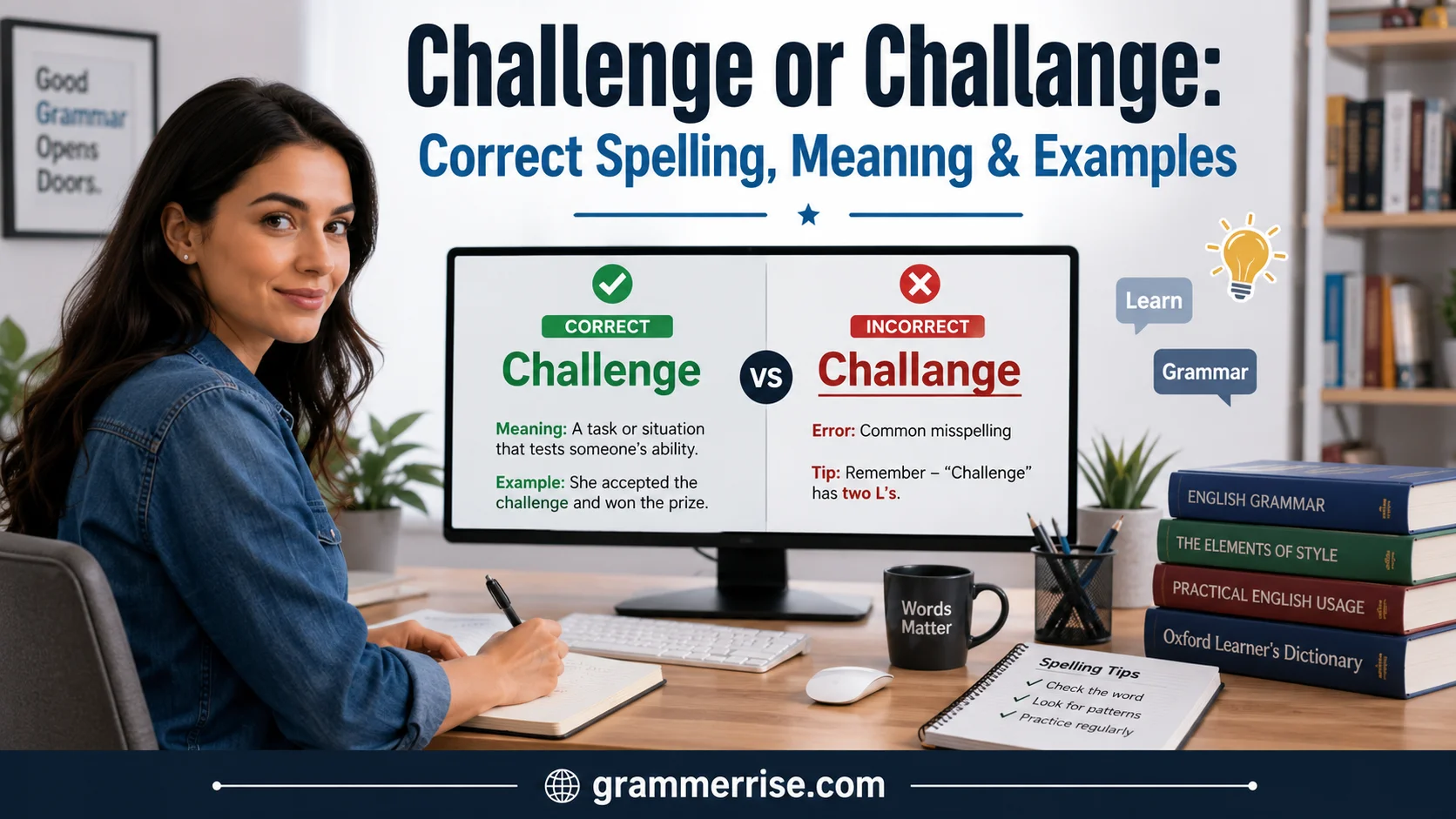
Please Visit for More Info: Challenge or Challange: Correct Spelling, Meaning and Examples
How to Remember the Correct Spelling of Privilege
Spelling mistakes become easier to avoid when you create a simple mental shortcut.
Try these methods:
Remember the Missing “D”
Think:
“A privilege is special, but it does not need an extra D.”
The word has:
✅ Privilege
❌ Priviledge
Break the Word Into Parts
Instead of seeing it as one long word, divide it:
Priv-i-lege
This makes the spelling easier to remember.
Connect It With Similar Words
Words that share the same ending pattern include:
- College
- Knowledge
- Alleged? (different spelling pattern)
But remember:
Privilege is the exception.
Privilege as a Noun
Most commonly, privilege works as a noun.
A noun names a person, place, thing, or idea. In this case, privilege names an advantage or benefit.
Examples of Privilege as a Noun
A Special Opportunity
“Studying abroad was a privilege that changed her life.”
The opportunity was valuable because not everyone gets the same experience.
A Special Right
“Driving is considered a privilege because it comes with responsibilities.”
This means driving requires following rules and showing responsibility.
An Honor
“It was a privilege to receive the award.”
Here, privilege means the person feels honored and grateful.
Privilege as a Verb
Although less common, privilege can also work as a verb.
As a verb, it means:
- To favor something
- To give importance to something
- To prioritize one thing over another
Examples:
- “The company privileges customer satisfaction over quick profits.”
- “Some systems privilege experience over formal qualifications.”
In these sentences, privilege means something receives greater importance.
Privilege vs Privileged: What Is the Difference?
Many people confuse privilege and privileged because they look similar.
They share the same root, but they have different uses.
Privilege
Usually functions as:
- A noun
- A verb
Example:
“Healthcare is a privilege.”
Privileged
Functions as an adjective.
It describes someone or something that has advantages.
Example:
“She grew up in a privileged environment.”
Privilege vs Privileged Comparison Table
| Feature | Privilege | Privileged |
| Word type | Noun or verb | Adjective |
| Meaning | A benefit or advantage | Having special advantages |
| Example | “Education is a privilege.” | “He had a privileged childhood.” |
Examples of Privilege in Everyday Life
The idea of privilege appears in many parts of life.
Education
Education can become a privilege when access depends on:
- Location
- Financial resources
- Available schools
- Learning opportunities
Example:
“Access to advanced technology gave students an educational privilege.”
Workplace
Companies often provide privileges to employees.
Examples include:
- Flexible schedules
- Company vehicles
- Extra vacation days
- Professional development programs
Example:
“Working from home became a popular workplace privilege.”
Technology
Modern technology has created new forms of privilege.
Examples:
- High-speed internet access
- Advanced devices
- Digital learning tools
For many people, technology access creates opportunities for:
- Education
- Business
- Communication
Privilege vs Right: What Is the Difference?
A common mistake is treating privilege and right as the same thing.
They are related but different.
Right
A right is something people are generally entitled to.
Examples:
- Legal protections
- Basic freedoms
- Access granted by law
Privilege
A privilege is an advantage or benefit that may depend on circumstances.
Examples:
- VIP event access
- Exclusive membership benefits
- Special workplace perks
Right vs Privilege Comparison Table
| Right | Privilege |
| Usually available because of law or principle | Usually depends on circumstances |
| Considered something people are entitled to | Considered an advantage or benefit |
| Example: Legal protection | Example: First-class travel |
Common Mistakes When Using Privilege
Understanding common errors can help you write correctly.
Mistake: Writing Priviledge
Incorrect:
“It was a priviledge to attend the ceremony.”
Correct:
“It was a privilege to attend the ceremony.”
Mistake: Adding Unnecessary Letters
Incorrect:
“She received a special priviledge.”
Correct:
“She received a special privilege.”
Mistake: Using Privilege When You Mean Privileged
Incorrect:
“He is privilege.”
Correct:
“He is privileged.”
Pronunciation of Privilege
The correct pronunciation is:
PRIV-uh-lij
Phonetic spelling:
/ˈprɪv.əl.ɪdʒ/
Break it into parts:
- Priv
- Uh
- Lij
A common mistake is pronouncing it like:
“Priv-uh-ledge”
The ending sounds like “lij,” not “ledge.”
Fun Facts About the Word Privilege
Here are some interesting facts:
- The word has existed in English for centuries.
- Its original meaning was connected to special laws.
- It can describe both positive experiences and social advantages.
- It can be used as both a noun and a verb.
- The spelling mistake “priviledge” is common because English spelling often depends on word history rather than pronunciation.
My Personal Experience as an English Specialist
As an English specialist, I’ve seen the spelling “priviledge” many times in student essays, emails, and professional writing. I remember correcting a student who used “priviledge” several times. When I explained that the correct spelling is privilege, the student told me that the extra d felt natural because of the way the word sounded.
That experience showed me how easily pronunciation can influence spelling. Since then, I’ve encouraged learners to remember privi-lege, not privi-ledge. A simple trick I often share is: “Privilege is special, but it doesn’t need an extra D.” With a little practice and proofreading, this common mistake becomes much easier to avoid.
Frequently Asked Questions
1. Is it correct to write privilege or priviledge?
The correct spelling is privilege. The word priviledge is a common spelling mistake and is not accepted in standard English. Many people add an extra “d” because the word sounds like it contains “ledge,” but the correct form has no extra letter.
2. What does the word privilege mean?
Privilege means a special right, benefit, or advantage given to a person, group, or profession. It can refer to social advantages, legal rights, special permissions, or opportunities that are not available to everyone.
3. Why do people often spell privilege as priviledge?
People commonly write priviledge because of pronunciation confusion. The ending sound of privilege can make writers think the word follows a pattern similar to words ending in “ledge.” Remembering the correct spelling through practice can help avoid this mistake.
4. How can I remember the correct spelling of privilege?
A simple way to remember it is to focus on the middle part of the word: privi-lege, not privi-ledge. Regular reading, writing practice, and proofreading can strengthen spelling accuracy.
5. Is privilege always related to wealth or money?
No, privilege is not limited to financial advantages. It can include access to education, opportunities, social support, legal protections, special permissions, or other benefits based on different circumstances.
6. How can using the wrong spelling affect my writing?
Using priviledge instead of privilege can make academic, professional, and online writing appear less accurate. Correct spelling improves credibility, communication quality, and the overall impression of your writing.
Conclusion
Understanding the difference between privilege and priviledge is a small but important step toward improving your English writing skills. While both words may look and sound similar, only privilege is the correct spelling used in standard English. Learning the proper spelling, meaning, and usage helps you avoid common mistakes in essays, emails, professional documents, and online communication.
The word privilege carries a deeper meaning beyond spelling. It represents advantages, rights, opportunities, and benefits that may come from different social, economic, cultural, or professional situations. By practicing correct spelling, improving vocabulary, and paying attention to language details, you can write with more confidence and accuracy. A single correctly written word can strengthen your message and make your communication clearer and more professional.