Kindergarten or Kindergarden creates spelling confusion because learners often compare correct spelling, pronunciation, and usage in education.
When I explain Kindergarten spelling to learners, I often see Kindergarden used as an incorrect version because of common typos and how the word sounds. The correct spelling is kindergarten, and the correct term follows a unique spelling pattern. The kindergarten spelling comes from German, not English, which is why it keeps garten instead of garden. Understanding the meaning, origin, and pronunciation helps parents, teachers, students, and writers use the word correctly in emails, school documents, school forms, and early education programs.
In early childhood education, accurate education writing depends on strong written communication and clear understanding. The German origin explains the unusual word formation and why English borrows words from other languages without changing their original structure. The strong rule is to always write kindergarten with garten. Many common spelling errors, common mistakes, and spelling errors appear in educational writing, school assignments, online searches, and everyday communication because pronunciation differences affect spelling.
Quick Answer
The correct spelling is kindergarten. Kindergarden is a common misspelling and should not be used in formal writing.Understanding the difference between kindergarten or kindergarden helps you write more accurately. It also reveals an interesting piece of language history and shows how words travel between cultures.
Kindergarten or Kindergarden: Which Spelling Is Correct?
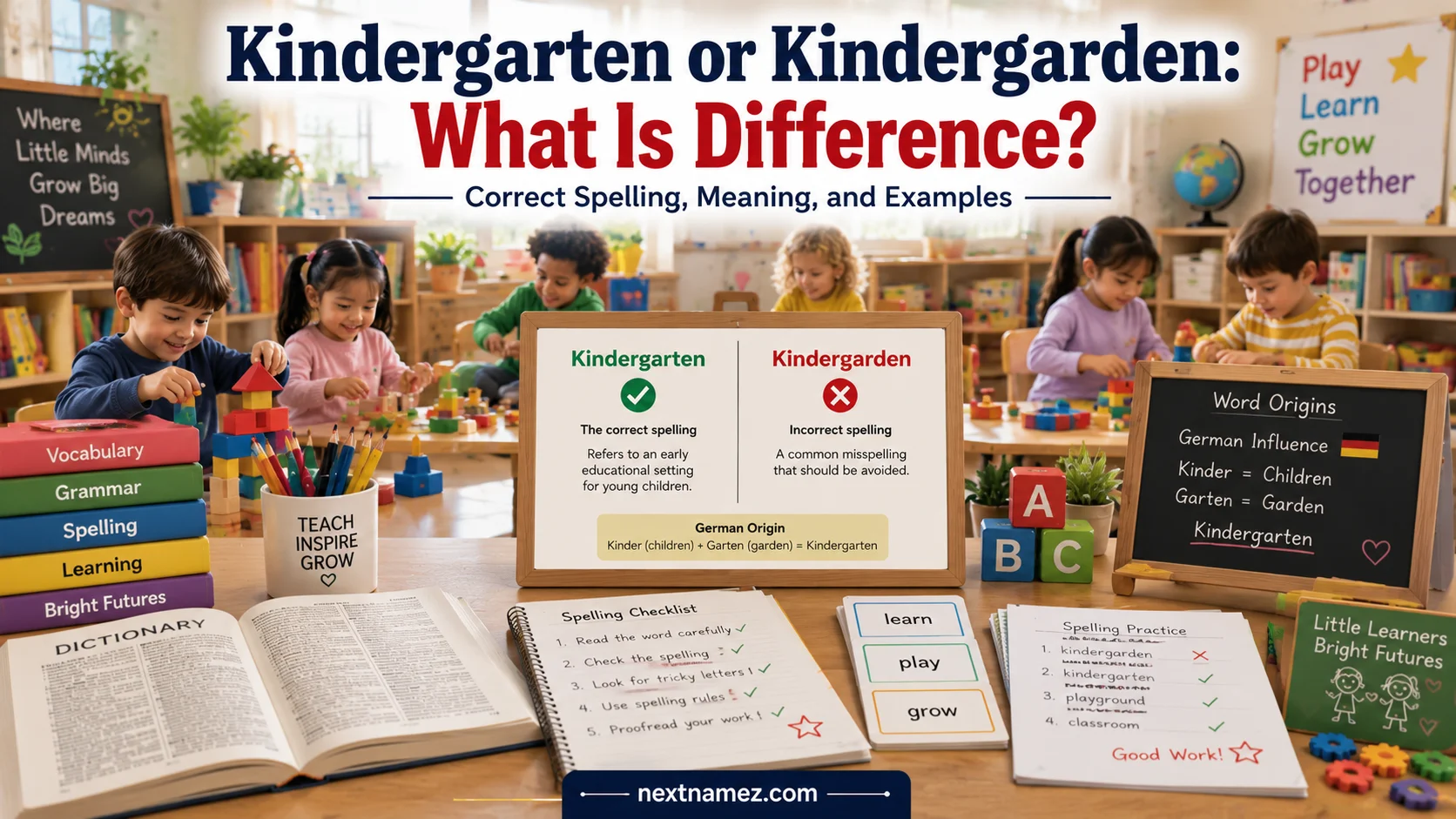
The correct spelling is kindergarten.
The word has three main parts:
Kinder + Garten = Kindergarten
- Kinder means children in German.
- Garten means garden in German.
The name does not describe an actual garden where children grow plants. Instead, it creates a metaphor. Children are compared to young plants that need care, attention, and the right environment to grow.
The spelling kindergarden is incorrect because it changes the original German word. The ending should be garten, not garden.
Kindergarten vs Kindergarden Quick Comparison
| Word | Correct Status | Meaning |
| Kindergarten | Correct | Early education program for young children |
| Kindergarden | Incorrect | Common spelling mistake |
If you are writing a school document, article, email, or educational material, always choose kindergarten.
What Does Kindergarten Mean?
Kindergarten is an early childhood education program designed to prepare young children for formal schooling.
In many education systems, kindergarten serves children around ages 5 to 6, although the exact age depends on the country, school district, and enrollment rules.
During kindergarten, children begin developing important academic and social skills. It acts as a bridge between early childhood experiences and structured education.
A kindergarten classroom usually introduces children to:
- Reading and language skills
- Basic mathematics
- Writing practice
- Social interaction
- Problem-solving
- Creativity
- Classroom routines
- Independence
Kindergarten is not only about learning letters and numbers. It helps children understand how to participate in a learning environment.
For example, a child may learn how to:
- Listen while someone else speaks.
- Share materials with classmates.
- Follow instructions.
- Complete simple tasks independently.
These skills create a foundation for future education.
Why Is Kindergarden Incorrect?
The spelling kindergarden looks reasonable because English speakers recognize the word “garden.” However, the spelling mistake comes from replacing the original German ending with an English one.
The correct word is:
✅ Kindergarten
Not:
❌ Kindergarden
The difference is only one letter, but that letter connects to the word’s history.
Why People Write Kindergarden
Several reasons explain why this mistake happens.
The Word Looks Like “Garden”
The English word garden is familiar to most people. When they see “kindergarten,” their brain naturally connects it with that familiar word.
For example:
- Garden = a place where plants grow.
- Kindergarten = a place where children grow and learn.
Because the meaning feels connected, people often write “kindergarden.”
The Original Language Is Less Familiar
Many English speakers do not know that kindergarten comes from German. Since “garten” is not a common English word, people often replace it with something they already know.
Pronunciation Creates Confusion
When people hear the word spoken quickly, the ending may sound like “garden.”
This leads to a common pattern:
Sound-based spelling:
Kindergarden
Correct spelling:
Kindergarten
English contains many words where pronunciation and spelling do not perfectly match. Understanding the origin often makes the spelling easier to remember.
The Origin and History of Kindergarten
The word kindergarten has a fascinating history.
German educator Friedrich Fröbel introduced the kindergarten concept in the 19th century.
In 1837, Fröbel established an early childhood education program in Germany. He believed young children learned best through:
- Play
- Creativity
- Exploration
- Hands-on activities
His idea challenged traditional education methods that focused heavily on memorization.
Fröbel viewed children like plants in a garden. Just as plants need sunlight, water, and care, children need support and opportunities to develop.
That idea inspired the name:
Kindergarten = children’s garden
Important Kindergarten History Facts
| Fact | Information |
| Origin | Germany |
| Creator | Friedrich Fröbel |
| Introduced | 1837 |
| Meaning | Children’s garden |
| Main focus | Learning through play and development |
The kindergarten model eventually spread across Europe, North America, and other parts of the world.
Today, kindergarten remains one of the most recognized stages of early education.
Kindergarten Meaning in Different Countries
The meaning of kindergarten changes slightly depending on where you live.
Some countries use kindergarten as a preschool program. Others use it as the first official year of elementary education.
Kindergarten in the United States
In the United States, kindergarten usually refers to the first year of elementary school.
Most children enter kindergarten around age 5, depending on local enrollment requirements.
Students typically learn:
- Alphabet recognition
- Reading foundations
- Counting
- Basic addition and subtraction
- Classroom behavior
- Social skills
Kindergarten often prepares children for first grade.
Kindergarten in Germany
In Germany, kindergarten traditionally refers to early childhood education before primary school.
Children usually attend kindergarten before beginning formal elementary education.
The focus often includes:
- Social development
- Creativity
- Communication
- Independence
Kindergarten Around the World
| Location | Common Meaning |
| United States | First year of elementary school |
| Germany | Early childhood education before primary school |
| Australia | Early learning or preschool program |
| Canada | Early education or first school year depending on region |
The exact structure depends on each country’s education system.
Kindergarten vs Preschool: What Is the Difference?
Many people use kindergarten and preschool as if they mean the same thing. However, they usually describe different stages.
Preschool
Preschool usually comes before kindergarten.
It focuses on preparing children for school through:
- Play-based learning
- Communication skills
- Social development
- Basic routines
Kindergarten
Kindergarten usually introduces more structured learning.
Children begin developing:
- Reading abilities
- Writing skills
- Mathematical thinking
- Classroom habits
Kindergarten vs Preschool Comparison
| Feature | Preschool | Kindergarten |
| Typical Age | 3–5 years | Around 5–6 years |
| Main Goal | Early preparation | Beginning formal education |
| Learning Style | Mostly play-based | Play combined with structured lessons |
| Academic Focus | Basic exposure | Foundational skills |
Both programs support children’s growth. They simply serve different stages.
How to Pronounce Kindergarten Correctly
The correct pronunciation of kindergarten is:
KIN-der-gar-ten
The word has three syllables.
Breaking it down makes pronunciation easier:
- KIN
- der
- gar
- ten
Many people pronounce it incorrectly because they change “garten” into “garden.”
Correct:
✅ Kindergarten
Incorrect pronunciation:
❌ Kindergarden
Clear pronunciation often helps improve spelling because you begin to recognize the original structure of the word.
Common Kindergarten Spelling Mistakes
Even though kindergarten is a familiar word, many writers make small errors.
Adding the Extra “d”
The most common mistake is writing:
❌ Kindergarden
The correct form is:
✅ Kindergarten
Remember that the word uses garten, not garden.
Confusing Kindergarten With a Physical Garden
Some people think the name refers to a literal garden.
However, the “garden” idea is symbolic.
Children are like growing plants. Education provides the environment they need to develop.
The word represents growth, care, and learning.
Using Kindergarten and Preschool Incorrectly
Another common mistake involves meaning rather than spelling.
Incorrect:
My three-year-old started kindergarten yesterday.
Depending on the location, a three-year-old is usually in preschool.
Correct:
My five-year-old started kindergarten yesterday.
Age requirements vary, but kindergarten typically begins later than preschool.
Read more: Niece or Neice: Difference, Examples and Usage Guide
Examples of Kindergarten Used Correctly
Using the word correctly in sentences helps reinforce the spelling.
Everyday Examples
- “My son starts kindergarten this fall.”
- “The kindergarten teacher planned a science activity.”
- “Children learn important skills during kindergarten.”
Educational Examples
- “The school updated its kindergarten curriculum.”
- “Kindergarten students practiced reading and basic math.”
- “The teacher created a welcoming kindergarten classroom.”
Workplace Examples
Even education professionals use the word regularly:
- “The district hired new kindergarten teachers.”
- “The program supports kindergarten readiness.”
Modern Kindergarten Education
Kindergarten has changed significantly over time.
Early kindergarten programs focused mainly on play and social growth. Modern kindergarten combines play with academic preparation.
Today’s kindergarten classrooms often include:
- Reading activities
- Digital learning tools
- Science experiments
- Art projects
- Group discussions
- Movement activities
The goal is not simply memorization. Teachers help children become confident learners.
Common Kindergarten Activities
| Activity | Skill Developed |
| Story reading | Language development |
| Drawing and crafts | Creativity |
| Counting games | Math skills |
| Group projects | Cooperation |
| Classroom discussions | Communication |
Case Study: How Kindergarten Builds Early Skills
Imagine a child entering kindergarten for the first time.
At home, the child may be comfortable playing and exploring. However, a classroom introduces new challenges.
The child must learn:
- How to follow a schedule.
- How to interact with classmates.
- How to complete assignments.
- How to ask questions.
A strong kindergarten program helps children adjust.
For example, a teacher may use group activities to encourage teamwork. Reading circles may improve language skills. Simple math games may build confidence with numbers.
Over time, these small experiences create important learning habits.
How to Remember the Correct Spelling of Kindergarten
A simple memory trick can prevent the kindergarten or kindergarden mistake.
Remember:
Kinder + Garten = Kindergarten
Think about the original meaning:
- Kinder = children
- Garten = garden
The word describes a place where children grow and develop.
Another helpful reminder:
Children grow in a kindergarten, not a kindergarden.
The spelling stays connected to its German origin.
FAQs
1. Is Kindergarden a correct spelling?
No, Kindergarden is not the correct spelling in standard English. The correct form is kindergarten. The incorrect version usually happens because people connect the word with “garden” and add an extra d.
2. Why is kindergarten spelled with “garten” instead of “garden”?
The word kindergarten comes from the German language, where “garten” means garden. English kept the original spelling, so the correct word uses garten, not garden.
3. How can I remember the correct spelling of kindergarten?
A simple memory trick is to remember that kindergarten has “garten” inside it. Think of its German origin and avoid adding the extra d that appears in kindergarden.
4. Why do people often write kindergarden by mistake?
Many people make this mistake because of pronunciation. When spoken quickly, kindergarten can sound similar to “kindergarden,” which influences how people spell the word.
5. Is kindergarten used differently in British and American English?
The spelling kindergarten remains the same in both American English and British English. However, educational systems and terms related to early childhood learning may differ between regions.
6. Where is the word kindergarten commonly used?
The word kindergarten is commonly used in early childhood education, schools, and learning programs. It refers to an early stage of education where young children develop social, language, and basic learning skills.
Conclusion
Understanding the difference between Kindergarten or Kindergarden becomes easier when you remember the word’s true origin and spelling pattern. Kindergarten is the only correct spelling in standard English, while Kindergarden is a common mistake caused by pronunciation and the connection with the word “garden.” Since the term comes from German, it keeps the original garten spelling. Whether you are a student, teacher, parent, or writer, using the correct form improves your written communication and avoids unnecessary spelling errors. A little attention to word origin, pronunciation, and spelling rules can help you confidently write kindergarten correctly every time.