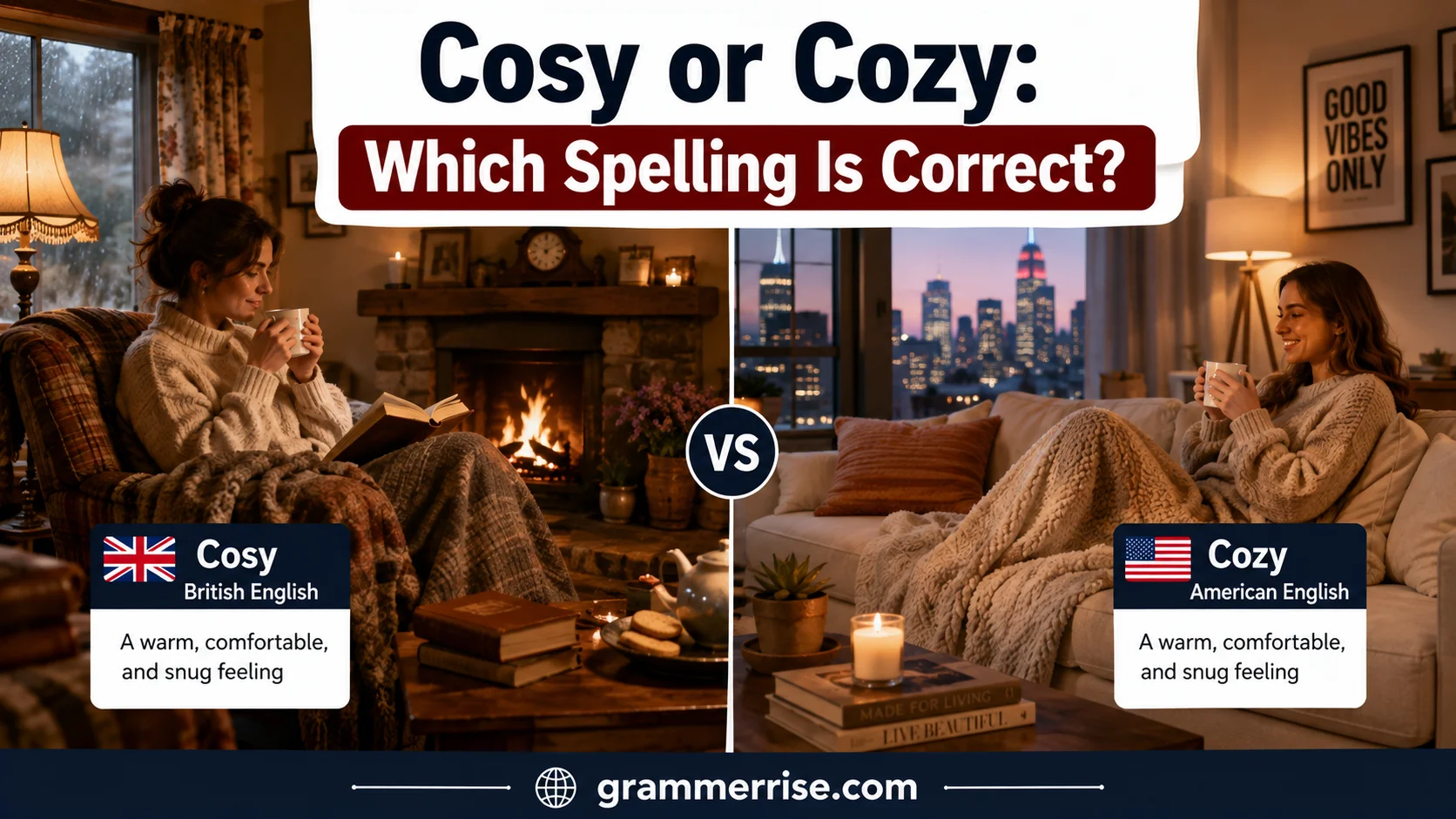
Cosy or Cozy explains two recognized spellings of the same word, showing regional choices for warm, comfortable, and pleasant expressions in English.
Both forms describe a warm and comfortable feeling with a pleasant and intimate sense. The main difference is regional because American English usually prefers cozy, while British English writers often choose cosy. Neither spelling has a separate meaning, and the letter change does not create a different pronunciation. The choice depends on the English variety, grammar, language usage, and writing style followed by the audience.
While drafting a client email and blog post, I once paused because the tiny spelling difference affected my confidence. This experience showed that clarity, consistency, and professionalism matter in business communication, publishing, and digital communication. Strong grammar, rich vocabulary, and accurate English spelling help create confident, polished, and reader-friendly content for a global audience. Both words express comfort and emotional warmth, similar to a person looking through frosted glass in the bitter cold while a warm fireside creates an inviting atmosphere and deep home comfort.

Quick Answer
Both “cosy” and “cozy” are correct spellings. The difference is based on regional English usage:
- Cosy ✅ → British English (UK, Australia, New Zealand)
- Cozy ✅ → American English (USA)
Both words mean comfortable, warm, relaxing, and pleasant.
Example:
- UK: “This cottage feels cosy.”
- US: “This cabin feels cozy.”
So, choose the spelling that matches your audience and keep it consistent.
Cosy or Cozy: Which Spelling Is Correct?
The answer depends on where your readers live.
Cosy and cozy are two accepted spellings of the same adjective. They describe something that feels:
- Comfortable
- Warm
- Relaxing
- Pleasant
- Safe
- Inviting
The main difference is not meaning. It is spelling style.
| Spelling | Commonly Used In | Example Sentence |
| Cosy | British English, Australian English, New Zealand English | “The cottage has a cosy fireplace.” |
| Cozy | American English | “The apartment feels cozy and welcoming.” |
If you write for American readers, cozy will usually look more natural. If your audience follows British English, cosy is the better choice.
Neither spelling is a mistake.

What Is the Difference Between Cosy and Cozy?
The difference between cosy and cozy is mainly based on regional spelling conventions.
The word has the same pronunciation, meaning, and usage. The only noticeable change is the letter “s” versus “z.”
Cosy in British English
British English typically uses cosy.
You will often find this spelling in:
- UK newspapers
- British novels
- European English websites
- Australian publications
- New Zealand writing
Examples:
- “She created a cosy reading space near the window.”
- “The restaurant has a cosy atmosphere during winter.”
- “They enjoyed a cosy evening beside the fireplace.”
The spelling fits naturally with other British spelling patterns, such as:
- Colour
- Favourite
- Honour
- Neighbour
Cozy in American English
American English commonly uses cozy.
This spelling appears frequently in:
- American books
- US websites
- Product descriptions
- Home design content
- Everyday conversations
Examples:
- “This blanket is soft and cozy.”
- “We stayed in a cozy cabin during our vacation.”
- “The café offers a cozy place to relax.”
American spelling often simplified certain words over time, and cozy became the standard form in US dictionaries.
Meaning of Cosy and Cozy
The meaning of cosy/cozy goes beyond simple physical comfort. It often creates a feeling or mood.
When people hear the word, they usually imagine warmth, peace, and relaxation.
For example, a cozy room is not just a room with furniture. It is a space that makes you want to sit down, slow your day, and feel comfortable.
A cozy environment may include:
- Soft lighting
- Comfortable furniture
- Warm colors
- Blankets
- Books
- Calm surroundings
- Personal decorations
Physical Comfort
The most common use describes something physically comfortable.
Examples:
- A cozy sweater on a cold morning
- A cosy blanket during winter
- A comfortable chair beside a fireplace
Emotional Comfort
The word can also describe feelings.
For example:
“A cozy family dinner creates memories that last for years.”
Here, cozy does not describe the temperature. It describes the emotional experience.
Atmosphere and Design
Interior designers often use the word to describe spaces that feel welcoming.
A cozy home usually focuses on:
| Element | How It Creates Comfort |
| Warm lighting | Makes the room feel peaceful |
| Soft fabrics | Adds physical comfort |
| Natural materials | Creates a relaxed feeling |
| Personal items | Makes the space feel meaningful |
| Organized spaces | Reduces stress |

The History and Origin of Cosy or Cozy
The word cozy has an interesting history. It entered English in the 18th century and originally described a feeling of comfort and warmth.
Over time, English developed different spelling traditions in different regions.
British and American English started moving in separate directions because of:
- Different dictionaries
- Regional writing styles
- Publishing standards
- Cultural influences
The spelling cozy became especially common in American English, while cosy remained popular in British English.
Similar spelling differences include:
| British English | American English |
| Colour | Color |
| Favourite | Favorite |
| Centre | Center |
| Theatre | Theater |
| Cosy | Cozy |
These differences do not mean one version is better. They simply show how languages naturally evolve.
Why Does Cozy Have a “Z” Instead of an “S”?
Many people wonder why Americans write cozy while British writers use cosy.
The change happened because American English developed its own spelling preferences over time.
During the 19th century, American dictionaries and writers promoted simpler spelling patterns. This helped create differences between American and British English.
The pronunciation stayed the same.
Both words sound like:
KO-zee
Examples:
- Cozy home
- Cosy home
The listener cannot usually tell which spelling you used unless they see it written.
Cosy or Cozy Pronunciation Guide
Both spellings have the same pronunciation.
Pronunciation: /ˈkoʊ.zi/
Simple breakdown:
- Co sounds like “koh”
- zy sounds like “zee”
Examples:
- “The room feels cozy.”
- “The cottage feels cosy.”
Both sentences sound identical when spoken.
Examples of Cosy and Cozy in Sentences
Understanding examples makes the difference easier to remember.
British English Examples Using Cosy
- The small café has a cosy atmosphere.
- She bought a cosy sweater for winter.
- The cottage looked cosy and welcoming.
- They spent a cosy evening watching movies.
American English Examples Using Cozy
- The bedroom has a cozy design.
- I love this cozy blanket.
- The cabin was cozy during the snowy weekend.
- They created a cozy corner for reading.

Common Phrases Using Cosy or Cozy
The word appears in many everyday expressions.
Cozy/Cosy Home
A cozy home feels welcoming and comfortable.
Example:
“Adding plants and warm lighting can make your home feel cozy.”
Cozy/Cosy Corner
A small area designed for comfort.
Example:
“She created a cosy corner with pillows and books.”
Cozy/Cosy Evening
A relaxing period spent indoors.
Example:
“We enjoyed a cozy evening with tea and movies.”
Cozy/Cosy Clothes
Comfortable clothing, usually worn for relaxation.
Examples:
- Cozy pajamas
- Cosy sweater
- Cozy socks
Cosy or Cozy in Different English-Speaking Countries
English-speaking countries do not always follow the same spelling rules.
| Country | Common Preference |
| United States | Cozy |
| United Kingdom | Cosy |
| Australia | Cosy |
| New Zealand | Cosy |
| Canada | Both are used |
Canada often uses a mixture of British and American spelling because of its history and geographic connection with the United States.
Is Cosy Wrong in American English?
No. Cosy is not wrong in American English.
Most Americans will understand the meaning immediately. However, it may look unusual because cozy is the standard spelling in the United States.
For example:
A US reader may find:
“This cosy sweater is perfect for winter.”
Understandable, but slightly different from the spelling they normally see.
For American audiences, using cozy creates a more familiar reading experience.
Read more: Ignitor vs Igniter: Correct Spelling, Meaning, Usage and Examples
Is Cozy Wrong in British English?
No. Cozy is also not incorrect in British English.
British readers understand the word easily. However, many traditional British publications prefer cosy.
For example:
A British magazine might write:
“Create a cosy bedroom with soft lighting.”
An American website may write:
“Create a cozy bedroom with soft lighting.”
Both sentences communicate the same idea.
Common Mistakes When Using Cosy or Cozy
Mixing Both Spellings
Incorrect:
“Create a cosy and cozy bedroom design.”
Better:
“Create a cozy bedroom design.”
Choose one style and keep it consistent.
Assuming One Version Is Incorrect
A common mistake is believing that one spelling is wrong.
The truth:
- Cosy = correct
- Cozy = correct
The difference is regional preference.
Ignoring Your Audience
A business writing for US customers should usually use American spelling.
A UK-based brand should normally follow British spelling.
Cosy and Cozy Synonyms
Sometimes another word may fit better depending on your meaning.
| Synonym | Best Used For |
| Comfortable | Physical comfort |
| Warm | Temperature or emotional feeling |
| Snug | Small and comfortable spaces |
| Relaxing | Calm experiences |
| Inviting | Welcoming places |
| Pleasant | Enjoyable situations |
Example:
Instead of:
“The room is cozy.”
You could write:
“The room feels warm and inviting.”
Cosy or Cozy: Quick Comparison
| Feature | Cosy | Cozy |
| Correct spelling | Yes | Yes |
| Main region | British English | American English |
| Pronunciation | Same | Same |
| Meaning | Comfortable and warm | Comfortable and warm |
| Popular usage | UK, Australia, New Zealand | United States |
My Personal Experience With Cosy or Cozy
As an English specialist, I’ve noticed that even small spelling differences can cause hesitation. I once paused while writing a client email because I wasn’t sure whether to use cosy or cozy. Since the audience was American, I chose cozy.
That experience taught me that both spellings are correct. Cozy is preferred in American English, while cosy is more common in British English, Australian English, and New Zealand English. Both words mean warm, comfortable, relaxing, and inviting.
Since then, I’ve focused on matching my spelling to the audience. For professional writing, choosing the right regional style and staying consistent makes content feel clearer and more polished.
FAQs
1. Is cosy and cozy the same word?
Yes, cosy and cozy are the same word with the same meaning. Both describe something warm, comfortable, relaxing, and pleasant. The only difference is the spelling used in different English regions.
2. Should I use cosy or cozy in American English?
In American English, cozy is the standard spelling. It is commonly used in books, websites, emails, and everyday writing in the United States.
3. Why do British writers use cosy instead of cozy?
British writers usually use cosy because it follows British spelling conventions. Many countries that follow British English also prefer this spelling in formal and casual writing.
4. Does cosy have a different pronunciation from cozy?
No, both cosy and cozy have the same pronunciation. Changing the letter “s” to “z” does not change how the word sounds.
5. Which spelling should I use in professional writing?
The best choice depends on your audience. Use cozy for American readers and cosy for British English audiences. Staying consistent helps your writing look professional and clear.
6. Can cosy or cozy be used to describe places?
Yes, both spellings can describe places such as homes, cafés, rooms, or environments that feel warm, inviting, peaceful, and comfortable. For example, a cozy café or a cosy living room creates a relaxing atmosphere.
Conclusion
The choice between cosy and cozy is simple once you understand the difference. Both words share the same meaning and describe warmth, comfort, and a pleasant feeling. The only variation comes from regional spelling preferences, with cozy being common in American English and cosy being preferred in British English and related varieties.
When writing, the most important thing is to consider your audience and stay consistent with your chosen spelling style. Whether you describe a cosy corner, a cozy home, or a comfortable atmosphere, both forms communicate the same feeling of relaxation, friendliness, and emotional warmth. Understanding this small spelling difference helps you write with more confidence and accuracy.