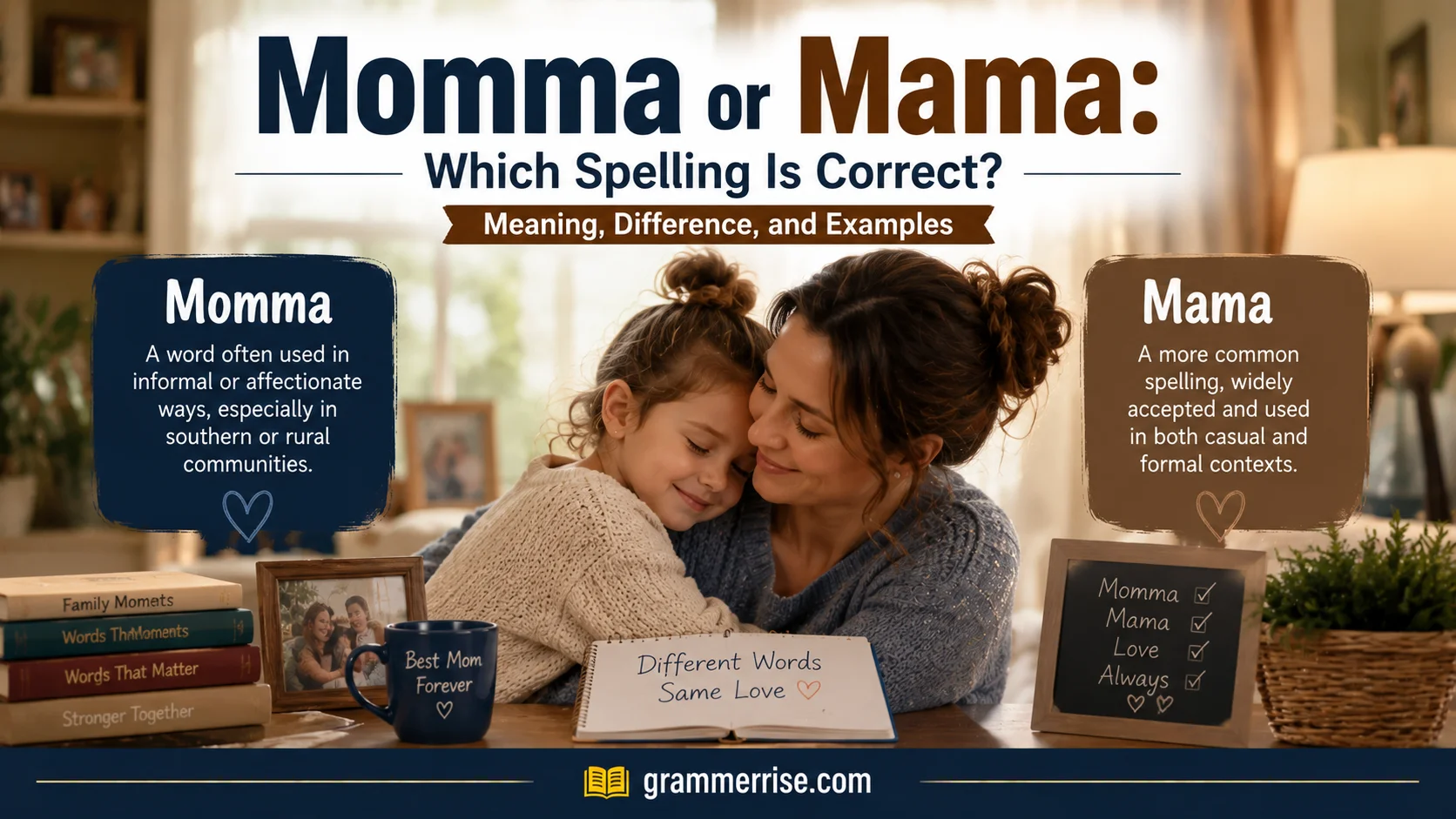
Momma or Mama many English learners and native speakers wonder if both words mean the same, or if context changes their usage in everyday writing. Many English learners and native speakers alike often wonder whether Momma and Mama are exactly the same or can be used anywhere. Both words refer to a mother, but their spellings, meanings, and usage may change with context.
Through my own research while creating content, I noticed Momma in books, songs, and conversations, while Mama felt more universal. A formal message or academic work may require an accepted form, while a casual, informal, and expressive style allows more personal choice. This guide explains the difference, grammar, and practical examples to help readers understand how to use both words correctly and choose the right term with confidence. The search query looks simple, yet it creates real confusion because tone, spelling, and accepted forms can vary depending on the situation.
In different families, people speak and call a parent using names like Mom, Mum, Mummy, or Mommy, reflecting regional, cultural, and language differences. The sounds and syllables of ma and mo can shift interchangeably when people say names aloud, especially when toddlers develop their own version through memory, media, notes, and small tricks from daily life. American homes often prefer Mom or Mommy, while British UK families may lean toward Mum or Mam.
Quick Answer
Both “momma” and “mama” are correct informal words that mean mother. The difference is mainly in style and tone, not meaning.
Mama is the more traditional and widely used spelling. It often feels warm, classic, and familiar.
Momma is a casual variation that sounds more like everyday speech. Many people use it to create a personal or regional feel.
In simple terms:
- Mama = a classic, affectionate word for mother.
- Momma = a more conversational spelling of the same word.
- Mother = the formal choice for professional writing.
What Does Mama Mean?
Mama is an affectionate and informal word for mother. People around the world use it as a loving name for their mothers, especially during childhood and family conversations.
Unlike the formal word “mother,” which sounds more official, “mama” feels personal. It often reminds people of comfort, care, protection, and home.
For example:
- “My mama taught me everything I know.”
- “I called my mama after I received the good news.”
- “Mama always had a solution for every problem.”
In these sentences, “mama” does more than identify a parent. It adds emotional warmth.
The Origin and History of Mama
The word mama has a fascinating linguistic history. Similar versions of this word appear in many languages around the world.
Examples include:
| Language | Word for Mother |
| English | Mama |
| Spanish | Mamá |
| French | Maman |
| Italian | Mamma |
| German | Mama |
| Hindi | Mamma/Maa |
| Chinese | Māma (妈妈) |
One reason “mama” appears in so many languages is because the sounds are easy for babies to produce. The “m” sound requires simple lip movement, and the open “a” sound is also common in early speech development.
Because of this natural connection with childhood speech, “mama” became a universal expression of love and attachment.
What Does Momma Mean?
Momma is another informal spelling of mother. It carries the same basic meaning as “mama,” but it often feels more like everyday spoken American English.
Many people use “momma” because it reflects how they naturally pronounce the word.
Examples:
- “My momma always believed in me.”
- “That child ran straight to his momma.”
- “Momma knows what’s best.”
The extra “m” does not change the meaning. Instead, it changes the feeling.
While “mama” often feels traditional and widely recognized, “momma” can sound more personal, regional, or conversational.
Why Did Momma Develop?
The spelling momma developed from the way some speakers pronounce the word. English often creates spelling variations when people try to represent spoken language.
Similar examples include:
- Mama
- Momma
- Mamma
These forms exist because language changes naturally over time. People adapt words to match their voices, communities, and cultural backgrounds.
Momma or Mama: What Is the Difference?
The main difference between momma and mama is not meaning. Both refer to a mother.
The difference comes from:
- Tone
- Region
- Personal preference
- Writing style
Here is a simple comparison:
| Feature | Mama | Momma |
| Meaning | Mother | Mother |
| Usage | Widely used | More conversational |
| Tone | Warm and traditional | Personal and casual |
| Common In | Many cultures worldwide | Mostly American English |
| Feeling | Classic affection | Familiar speech |
Think of it this way:
Mama feels like a timeless family word.
Momma feels like a word you might hear someone say at home.
Both express love.
Are Momma and Mama Both Correct?
Yes. Both momma and mama are correct informal words.
Many people assume “momma” is wrong because “mama” appears more frequently in dictionaries and formal references. However, “momma” is recognized as a legitimate informal variation.
The important thing is context.
For example:
Personal Writing
Both work:
- “I miss my mama.”
- “I miss my momma.”
Formal Writing
Neither is usually the best choice.
Instead, use:
- “My mother passed down many important lessons.”
- “Her mother supported her dreams.”
Formal writing usually requires the standard term “mother.”
Emotional Difference Between Momma and Mama
Words carry feelings, not just definitions.
Although momma and mama mean the same thing, many readers notice a slight emotional difference.
Mama Often Feels:
- Traditional
- Gentle
- Universal
- Nostalgic
Example:
“Mama held my hand during difficult times.”
This sentence feels timeless and familiar.
Momma Often Feels:
- Personal
- Regional
- Conversational
- Childhood-focused
Example:
“Momma always saved a piece of cake for me.”
This sounds like a personal memory.
The difference is subtle, but writers often choose one spelling intentionally to create a specific mood.
Momma or Mama: Which One Should You Use?
Choosing between momma or mama depends on what you are writing.
Use Mama When:
Choose “mama” when you want a classic and widely understood expression.
Examples:
- Family stories
- Poems
- Emotional writing
- General references
Example:
“Her mama taught her the importance of kindness.”
Use Momma When:
Choose “momma” when you want the writing to sound like natural speech.
Examples:
- Dialogue
- Personal stories
- Character development
- Social media captions
Example:
“My momma always told me to work hard.”
The word choice helps readers hear the speaker’s voice.
Mama vs Mom vs Mother: Understanding the Difference
Many people use these words interchangeably, but they create different impressions.
| Word | Meaning | Tone | Common Use |
| Mother | Female parent | Formal | Professional writing |
| Mom | Mother | Casual | Everyday American speech |
| Mama | Mother | Affectionate | Family conversations |
| Momma | Mother | Personal/casual | Informal speech |
Mother
“Mother” is the most formal option.
Examples:
- “The child’s mother attended the meeting.”
- “Her mother influenced her career.”
Mom
“Mom” is the most common casual American term.
Examples:
- “I asked my mom for advice.”
- “My mom makes the best cookies.”
Mama
“Mama” adds emotional warmth.
Example:
- “Mama always believed in me.”
Momma
“Momma” creates a stronger feeling of personal connection.
Example:
- “Momma hugged me before I left.”
Why Do People Say Mama Instead of Mom?
The word “mama” has emotional power because it connects with early childhood.
Many children learn “mama” before they learn more complex words because it is easy to pronounce.
Cultural Influence
Across many cultures, “mama” represents:
- Love
- Safety
- Family
- Childhood memories
Even adults who usually say “mom” may use “mama” when expressing strong emotions.
For example:
- “I need my mama.”
- “Nobody cooks like mama.”
- “Mama always knows.”
These phrases feel more emotional than simply saying “mother.”
Read more: Hustle vs Hussle: Which Spelling Is Correct and Examples?
Why Do Some People Spell It Momma Instead of Mama?
The spelling “momma” often reflects pronunciation.
In some American communities, especially in casual speech, people naturally pronounce the word with a stronger “m” sound.
This spelling can also represent identity.
A writer might choose “momma” because:
- It matches their family’s language.
- It reflects their regional voice.
- It creates a more realistic character.
For example, a fictional character saying:
“My momma raised me right.”
sounds different from:
“My mama raised me right.”
Neither is wrong. The writer simply creates a different voice.
Common Expressions Using Mama and Momma
Both words appear in popular phrases.
Common Mama Expressions
Mama Bear
A protective mother.
Example:
“She became a mama bear when someone threatened her child.”
Mama’s Boy
A son who has a very close relationship with his mother.
Mama Knows Best
A phrase suggesting mothers often give wise advice.
Common Momma Expressions
Proud Momma
A mother expressing happiness about her child’s achievements.
Example:
“A proud momma watched her daughter graduate.”
Momma’s Little Helper
A child who enjoys helping their mother.
Momma Said
Often used when sharing advice or memories.
Momma or Mama in Different English-Speaking Regions
Language changes depending on location.
American English
Both “mama” and “momma” appear in American English.
However:
- “Mom” is more common in everyday speech.
- “Mama” and “momma” often appear in emotional or cultural contexts.
British English
British speakers usually prefer:
- Mum
- Mummy
Examples:
- “My mum called yesterday.”
- “I love my mummy.”
Southern United States Usage
The word “momma” appears frequently in Southern American speech and writing.
It often creates a warm, family-centered tone.
Is Momma a Misspelling of Mama?
No. Momma is not simply a misspelling of mama.
It is an accepted informal variation.
However, because “mama” is more internationally recognized, some readers may consider it the more traditional spelling.
The best choice depends on your purpose.
For example:
- A grammar article may discuss “mama” first.
- A personal memoir may use “momma.”
- A fictional character may use either.
Momma or Mama in Literature, Music, and Culture
Writers and artists carefully choose words that create emotional reactions.
“Mama” appears frequently in songs, stories, and poems because it carries universal feelings.
Examples of themes often connected with mama include:
- Childhood memories
- Family sacrifice
- Love
- Protection
- Home
Meanwhile, “momma” often appears in dialogue because it sounds closer to natural speech.
A character saying “momma” immediately feels more personal.
Common Mistakes When Using Momma and Mama
Mistake 1: Assuming One Is Always Wrong
Both spellings are acceptable.
The mistake happens when people treat language as completely fixed. English changes through culture and usage.
Mistake 2: Using Informal Words in Formal Writing
“Mama” and “momma” work well in personal writing but may not fit professional documents.
Use “mother” when writing:
- Reports
- Academic papers
- Legal documents
Mistake 3: Ignoring Tone
The spelling you choose affects how readers hear the sentence.
Compare:
“My mama taught me courage.”
and
“My momma taught me courage.”
Both work, but they create slightly different voices.
Quick Trick to Remember Momma vs Mama
Use this simple guide:
| Situation | Best Choice |
| Formal writing | Mother |
| Everyday American speech | Mom |
| Emotional writing | Mama |
| Personal storytelling | Momma or Mama |
A quick memory trick:
Mama = classic affection.
Momma = conversational affection.
FAQs
1. Are Momma and Mama the same word?
Yes, Momma and Mama both refer to a mother, but they are not always used in the same situations. Mama is more widely recognized and works well in general writing, while Momma often feels more personal, emotional, or informal.
2. Is Mama more correct than Momma?
Neither word is incorrect. Mama is considered the more traditional and universal spelling, while Momma is a regional or expressive variation often used in casual conversations, songs, and personal writing.
3. When should I use Momma instead of Mama?
You can use Momma when you want to create a warm, familiar, or emotional tone. It is common in family conversations, storytelling, and creative writing where a personal feeling is important.
4. Can I use Momma in formal writing?
It is usually better to avoid Momma in formal writing, academic papers, or professional communication unless you are quoting someone or discussing a specific style. Mama or “mother” is often a safer choice.
5. Why do some people pronounce Momma and Mama differently?
The difference often comes from regional accents, dialects, and personal speech patterns. Some communities naturally use “Momma,” while others prefer “Mama” based on culture, language, and family traditions.
6. Do children choose between Momma, Mama, Mom, or Mommy?
Yes, children often learn these names through family habits, sounds, and everyday communication. Parents, culture, location, and the words children hear around them influence whether they say Momma, Mama, Mom, Mum, or Mommy.
Conclusion
Understanding the difference between Momma vs Mama helps you make better choices in everyday conversations, writing, and cultural situations. While both words express love and connection with a mother, Mama is more universal and commonly accepted, whereas Momma often carries a warmer, more personal, and informal feeling.
The best choice depends on your audience, purpose, and the tone you want to create. Whether you see these words in books, songs, family conversations, or professional writing, knowing their differences allows you to communicate with more clarity and confidence. Both forms are meaningful, and each one reflects the unique ways people express family, affection, and tradition.